LAZY EYE & SQUINT TREATMENT MELBOURNE

HAWTHORN EYE CLINIC

Treatment aimed to improve vision and eye alignment.

LAZY EYE & SQUINT TREATMENT MELBOURNE

A PATIENT’S GUIDE

Our ophthalmologists take the time to explain each diagnosis in clear, simple terms and discuss all available treatment options. We encourage questions, so you can make educated decisions about your eye care treatment with confidence.

All the specialists use cutting edge, proven technology and strive to provide you with high quality care.

HAWTHORN EYE CLINIC
Learn more about lazy eye (Amblyopia) and Squint (Strabismus) treatments:

Frequently Asked Questions

Visit our frequently asked questions section to find answers to common questions about lazy eye and squints including:

  • Will my child grow out of a squint?

  • Is eye patching effective?

  • What are the risks of surgery?

  • How much does surgery cost?

  • Can adults have squint treatment?

  • How long until I can undertake everyday activities after surgery?

  • Can lazy eye or squints return after treatment?

Understanding lazy eye and squints

Squint – A squint, also known as strabismus, occurs when the eyes do not point in the same direction. One eye may turn inward toward the nose, outward toward the ear, upward, or downward. The eye turn may be constant or only happen occasionally, especially when tired or unwell.

Lazy Eye – A lazy eye (amblyopia) develops when the brain starts to ignore vision from the weaker or misaligned eye.

This commonly occurs in childhood when the visual system is still developing.

Early diagnosis and treatment are important to help protect vision and improve eye alignment.
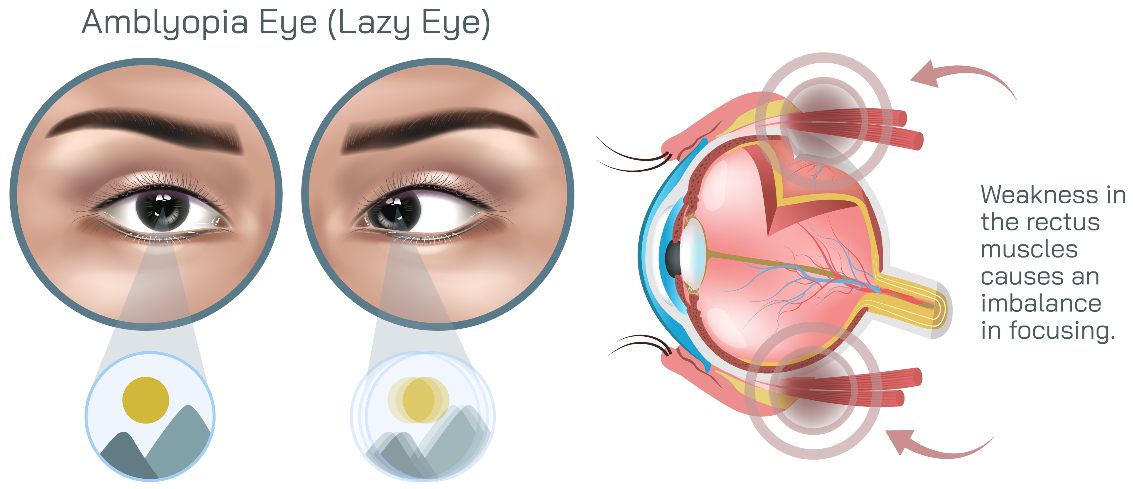
Lazy Eye Explanation

What causes lazy eye and squint problems

Squint (Strabismus)? – Strabismus affects the muscles and nerves that control eye movement. Normally, both eyes work together and focus on the same object. With strabismus, the eyes become misaligned and send different images to the brain.

Types of squint may include:

  • Esotropia – the eye turns inward

  • Exotropia – the eye turns outward

  • Hypertropia – the eye turns upward

  • Hypotropia – the eye turns downward.

Squints can occur:

  • At birth or during early childhood

  • Following illness or injury

  • Due to neurological or muscular conditions

  • From uncorrected long-sightedness or other refractive errors

  • Alongside lazy eye (amblyopia)

Lazy Eye (Amblyopia)? – Lazy eye occurs when one eye develops weaker vision because the brain favours the stronger eye. If untreated during childhood, the weaker eye may not develop normal vision.

Lazy eye is commonly associated with:

  • Strabismus (squint)

  • Significant difference in prescription between the eyes

  • Cataracts or droopy eyelids

  • Long-sightedness, short-sightedness or astigmatism

Treatment is generally most successful when started early, particularly before 7 to 8 years of age.

What are the symptoms of squint and lazy eye and how can they affect vision?

Symptoms may include:

  • Eyes that do not appear aligned

  • One eye drifting inward or outward

  • Double vision

  • Squinting or closing one eye

  • Reduced vision in one eye

  • Tilting or turning the head

  • Headaches, often caused by visual strain

  • Poor depth perception

  • Difficulty reading or focusing

How are squints and lazy eye problems diagnosed?

Squints and lazy eye are diagnosed through a comprehensive eye examination by an eye care professional, focusing on vision strength and eye muscle function. Eye examinations to detect squints and lazy eye may include:

Diagnostic test Description
Orthoptic Examination: Assessment of visual acuity, stereo-vision, double-vision, ocular motility and size of eye-turn.
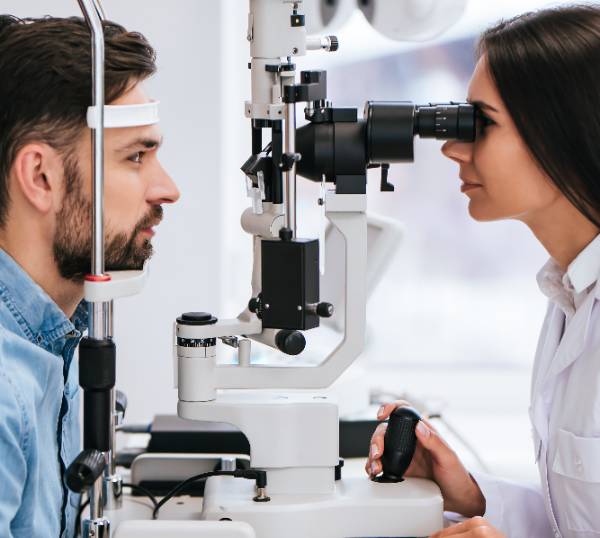
Slit Lamp Exam: A microscope examination to assess the general health of the eye and retina.
Cycloplegic Retinoscopy: Usually for children, cyclopentolate eye drops temporarily dilate the pupil and relax the eye’s focusing muscles, allowing a more accurate refraction measurement.
Additional Testing: Using the IOL Master to accurately measure the length of the eye in cases of short-sightedness..
cataract diagnosis

These tests help ensure an accurate diagnosis and help determine the safest and most effective treatment options available for your diagnosis.

Lazy Eye & Squint Treatment Melbourne

If you have any questions about refractive eye treatments, appointment bookings, location or opening hours, visit:

How are lazy eye and squints treated?

Lazy eye & Squint Treatments

Lazy eye and squints can be effectively treated using a range of options, depending on your vision needs, eye health, and lifestyle. Treatments aim to improve eye strength and focus, with the goal of clearer vision.

Non-Surgical Treatments

Glasses and contact lenses – Corrective eyewear may help align the eyes by reducing the focusing effort needed to see clearly.

Glasses can help treat:

  • Long-sightedness (hyperopia)
  • Short-sightedness (myopia)
  • Astigmatism

In some children, glasses alone may significantly reduce or correct the squint.

Eye Patching (Occlusion Therapy) – Patching involves covering the stronger eye to encourage the weaker eye to work harder. Benefits of patching may include, improving vision in the weaker eye, stimulating visual development and helping prevent permanent lazy eye.

Patching may involve, fabric eye patches, adhesive skin patches or blurring eye drops. Treatment schedules vary depending on the child’s age and level of vision impairment.

Eye Exercises & Orthoptic Therapy Certain forms of strabismus may improve with eye exercises designed to strengthen eye coordination and focusing ability. These exercises may help, improve eye teamwork, reduce eye strain, improve focusing control.

Botox Injections – Botulinum toxin (Botox®) injections can temporarily weaken an overactive eye muscle, helping the eyes align more effectively.

Surgical Treatments

Strabismus Surgery – Surgery may be recommended when glasses or non-surgical treatments do not fully correct the eye turn.

Strabismus Surgery

Strabismus Surgery – Surgery may be recommended when glasses or non-surgical treatments do not fully correct the eye turn.

What Does Surgery Involve – Strabismus surgery is usually performed under general anaesthetic and generally takes between 1–2 hours.

During surgery:

  • Small incisions are made in the conjunctiva (surface membrane of the eye)
  • Eye muscles are adjusted to strengthen or weaken their action
  • Dissolvable stitches are used to reposition the muscles.

The aim is to improve eye alignment, reduce double vision and help the eyes work together more effectively.

Frequently asked questions about strabismus surgery?

Some intermittent eye turns may improve, but persistent squints should always be assessed by an eye specialist.

Strabismus surgery is generally safe, but like all procedures it carries some risks and potential side effects.

These may include over or under-correction, which can often be improved with glasses, contact lenses, or further laser treatment. Most complications are mild and do not affect long-term vision.

In rare cases, vision may not fully return to the expected level, even with corrective lenses. Permanent vision loss is extremely uncommon.

Temporary side effects may include:

  • Infection
  • Bleeding or redness
  • Double vision
  • Need for additional surgery
  • Muscle scarring or slippage
  • Recurrence of the squint

Most side effects improve as the eyes heal over time.

The cost depends on which procedure is suitable. You will be advised on the cost of surgery after the consultation.

If Medicare classify this condition as a “cosmetic problem”, you will not be able to get any Medicare benefit for this surgery.

Fees will depend on the following factors:

  • Privately insured patients – Please check with your health fund whether your are covered for refractive surgery
  • Hospital costs – Please check with your health insurance fund
  • Out-of-pocket costs – We will provide you with a written estimate for the surgeon
  • Anaesthetic costs – Anaesthetists charge different fees, we provide you with the contact details of the Anaesthetist, so you can confirm fees in advance.

Yes. Patching is one of the most effective treatments for lazy eye in young children.

As a general rule, if you are younger than 40 years of age, most likely yes.  After the age of forty –whether you had the surgery before at some stage, you will more than likely need to wear glasses for reading.   One way to eliminate the need to wear glasses for near work is to plan surgery on one eye to be good for distance and the other eye to be good for near work.  This arrangement is referred to as “mono-vision”. This does not suit everyone.  If you are considering this option, we strongly recommend you try it first with contact lenses –or glasses- for about 2 months before committing yourself to this surgical option.

Yes. Adults can benefit from glasses, prisms, Botox or surgery to improve alignment and reduce double vision.

In some cases, the eye turn may recur over time and additional treatment may be needed.

This will vary from person to person and is best assessed by your ophthalmologist to when you can undertake specific activities such as:

  • Driving
  • Exercising – Swimming, lifting objects
  • Wearing eye makeup
  • Bending over
  • Return to work or other activities.

Lazy Eye & Squint Treatment Melbourne

If you have any questions about refractive surgery, appointment bookings, location or opening hours, visit: