
DIABETIC EYE DISEASE TREATMENT MELBOURNE
A PATIENT’S GUIDE
Our ophthalmologists take the time to explain each diagnosis in clear, simple terms and discuss all available treatment options. We encourage questions, so you can make educated decisions about your eye care treatment with confidence.
All the specialists use cutting edge, proven technology and strive to provide you with high quality care.
HAWTHORN EYE CLINIC
What are Diabetic Eye Diseases?
People with diabetes are at risk of developing damage to the tiny blood vessels in the retina at the back of the eye, a condition known as diabetic retinopathy. These blood vessels may swell, leak blood or fluid, or become blocked.
Fluid leakage can cause retinal swelling (macular oedema), leading to reduced vision, while blocked vessels may reduce blood supply to the retina (ischaemia). In some cases, abnormal new blood vessels may develop (proliferative diabetic retinopathy), which can bleed inside the eye, causing sudden vision loss and scar formation.
Diabetic retinopathy usually develops slowly over months or years, and the risk increases the longer a person has diabetes.
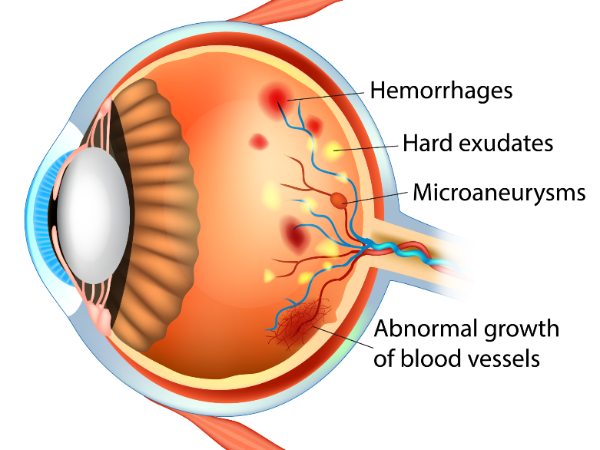
If left untreated, diabetic retinopathy can cause serious eye damage and may eventually lead to blindness. Early diagnosis and treatment are the best ways to protect vision.
As the condition is often painless and may not cause noticeable vision changes in the early stages, people with diabetes should have a comprehensive eye examination every year. Regular screening allows changes to be detected and treated early, helping to minimise vision loss.
How do diabetic eye diseases affect vision?
Diabetic eye disease typically progresses over time and patients may be symptom-free until significant damage has occurred. Without early detection and treatment, it can result in severe and permanent vision loss.
As the conditions progress, individuals may develop:
How are diabetic eye diseases diagnosed?
Ophthalmologists diagnose potential diabetic eye issues through a comprehensive eye examination to assess the clarity, shape, and health of your eye, using several specialised tests that may include:
| Test | Description |
|---|---|
| Slit Lamp Exam: | A microscopic examination to assess eye health and its internal structures. |
| Dilated Fundus Exam: | Mydriatic eye drop is used to dilate the pupil and allows a view of the fundus, (the retina, optic nerve head, macula and blood vessels). |
| OCT: | A scan which gives a 3-D, cross-sectional contour map of the layers of the back of the eye. Helps detect subtle changes, essential for the early diagnosis of diabetic eye diseases. |
| Additional Testing: | A Fundus Fluorescein Angiogram (FFA) may be required. A fluorescein dye is injected into the arm and a series of photographs are taken as the dye travels through the retinal blood vessels. This helps detect any blockage or leakage in the retina. |

These tests help your ophthalmologist determine if there are any issues present, how advanced it is, and whether it’s affecting vision enough to consider specific treatments.
How are diabetic eye conditions treated?
Treatment for diabetic eye disease depends on which part of the eye is affected, how advanced the condition is, and the type of issues present. The main goal is to prevent further vision loss, stabilise eye health, and improve visual clarity where possible. Management may include non-surgical and surgical approaches – See below:
1. Non-surgical treatments
Blood Sugar and Blood Pressure Control – Careful management of blood sugar, blood pressure, and cholesterol plays a vital role in protecting the eyes from further damage. Maintaining stable glucose levels helps prevent fluid leakage and reduces the risk of new abnormal blood vessels forming in the retina.
Anti-VEGF Injections – Anti-VEGF (vascular endothelial growth factor) medications such as aflibercept, ranibizumab, or bevacizumab are injected into the eye. These medications block the protein responsible for abnormal blood vessel growth and fluid leakage in the retina.
They are commonly used to treat diabetic macular oedema (DMO) and proliferative diabetic retinopathy, helping to reduce swelling and improve or stabilise vision. Treatments are often given as a series of injections over time, with follow-up monitoring.
Steroid Injections or Implants – Steroids are used to reduce inflammation and retinal swelling, particularly when anti-VEGF therapy is not suitable or effective. They may be given as an injection or a small implant that gradually releases medication over several months to control macular oedema.
Laser Treatment (Photocoagulation) – Laser therapy seals leaking blood vessels and prevents the growth of new abnormal vessels in the retina.
There are two main types:
Focal or grid laser: Targets specific areas of leakage to treat macular oedema.
Pan-retinal photocoagulation: Treats widespread abnormal blood vessels to prevent bleeding and vision loss in proliferative diabetic retinopathy.
Laser treatment can stabilise vision and reduce the risk of severe vision loss, though it rarely restores vision already lost.
2. Surgical treatments
Vitrectomy – In advanced cases of diabetic eye disease, vitrectomy surgery may be required. This delicate procedure removes blood, scar tissue, or cloudy vitreous gel from inside the eye that may be causing blurred or distorted vision. It helps restore a clearer pathway for light to reach the retina and can prevent further retinal damage or detachment.
Cataract Surgery – People with diabetes are at higher risk of developing cataracts earlier in life. Cataract surgery involves removing the clouded natural lens and replacing it with a clear artificial lens (intraocular lens implant). This improves vision clarity and can enhance the effectiveness of other diabetic eye treatments.
Glaucoma Surgery – If diabetic eye disease causes or worsens glaucoma (increased pressure inside the eye), surgery may be required to lower eye pressure and protect the optic nerve. Options include laser-based procedures or creating a small drainage channel to allow fluid to leave the eye more effectively.
Your ophthalmologist will recommend a personalised treatment plan based on your diagnosis, vision, and overall eye health.
Early detection and timely management are crucial — regular eye examinations and follow-up visits give the best chance of preserving long-term vision.
Diabetic Eye Disease – Frequently Asked Questions
Proud member of the Royal Australian and New Zealand College of Ophthalmologists.