
KERATOCONUS
TREATMENT MELBOURNE

HAWTHORN EYE CLINIC

Safe and effective treatment, with the aim to preserve vision.

KERATOCONUS TREATMENT MELBOURNE

A PATIENT’S GUIDE

Our ophthalmologists take the time to explain each diagnosis in clear, simple terms and discuss all available treatment options. We encourage questions, so you can make educated decisions about your eye care treatment with confidence.

All the specialists use cutting edge, proven technology and strive to provide you with high quality care.

HAWTHORN EYE CLINIC
Learn more about keratoconus and how it is diagnosed and treated:

Frequently Asked Questions

Visit our frequently asked questions section to find answers to common questions about cataract surgery including:

  • Does keratoconus surgery improve vision?

  • How long does keratoconus surgery take?

  • Is keratoconus surgery painful?

  • How much does keratoconus surgery cost?

  • Can keratoconus return?

  • Are there risks with keratoconus surgery?

  • How long until I can drive after the surgery?

  • How long until I can undertake everyday activities after surgery?

What is keratoconus?

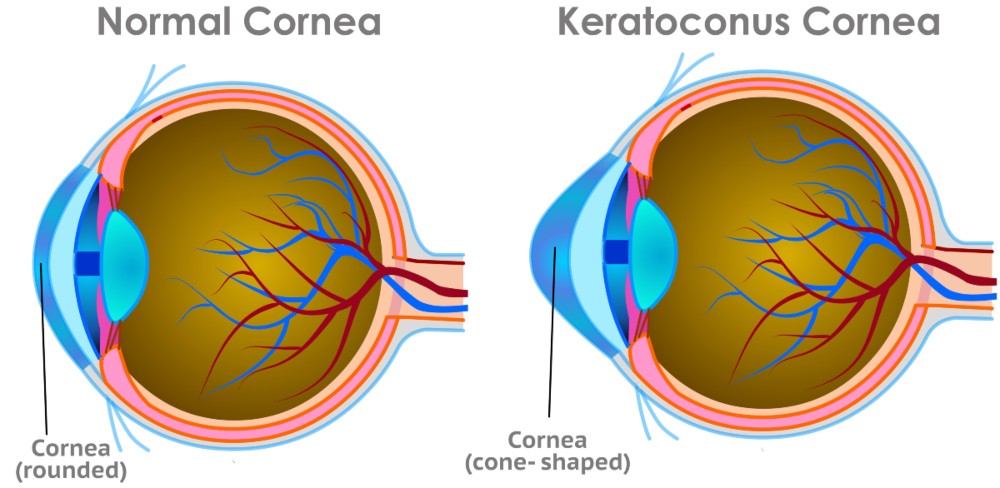
Keratoconus is a progressive condition of the cornea—the clear, dome-shaped surface at the front of the eye. Instead of maintaining its normal rounded shape, the cornea gradually becomes weaker and bulges forward in the middle into a cone-like shape. This can cause blurred, distorted or fluctuating vision and increasing sensitivity to light.
Keratoconus Treatment Melbourne
What causes keratoconus?

Causes of keratoconus are not fully known but a family history, some genetic conditions and allergic conditions that cause itchy eyes may increase risk.

Am I at risk of getting keratoconus?

Keratoconus usually develops in younger people aged 16 to 30 years old, and progresses until about the age of 40. It may affect one or both eyes. One eye may be worse than the other.

How does keratoconus affect vision?

As keratoconus develops the following affects may occur:

  • Gradual deterioration in vision

  • Glare and sensitivity to bright lights

  • Progressively blurred, hazy and foggy vision.

  • Haloes around bright lights (especially noticeable at night)

  • Frequent changes to glasses prescription as the disease progresses

How is keratoconus diagnosed?

Ophthalmologists diagnose keratoconus through a comprehensive eye examination that may include:

Diagnostic test Description
Eye Exam: Evaluates how clearly you see and inspects the inner eye health.
Corneal Topography: Maps the cornea to help detect changes in shape & identify keratoconus.
Corneal Tomography: Provides a three-dimensional corneal image to measure the front, back & thickness.
Pachymetry: Measures corneal thickness, helps determine condition severity &  treatments.
Slit Lamp Examination Helps examine the cornea under high magnification.
cataract diagnosis

Together, these tests help the ophthalmologist determine if keratoconus is present. Keratoconus is often progressive, repeat scans may be performed over several months to determine whether the condition is worsening.

Detecting progression is particularly important, as potential treatments may be more effective before significant corneal damage has occurred.

Keratoconus Treatment Melbourne

If you have any questions about keratoconus, appointment bookings, location or opening hours, visit:

How is keratoconus treated?

Keratoconus Treatment

Treatment for keratoconus depends on the severity of the condition and whether it is progressing. The main goals are to improve vision, slow or stop disease progression, and preserve the health of the cornea.

Keratoconus Surgery

The decision to proceed with keratoconus surgery will depend upon the degree to which the condition is impairing vision and effecting your safety and lifestyle.

Non-surgical options

Early keratoconus may be managed with prescription glasses or specialised contact lenses

Corneal Allogenic Intrastromal Ring Segments (CAIRS)

Corneal Allogenic Intrastromal Ring Segments (CAIRS) is a treatment for selected patients with keratoconus that uses small segments of healthy donor corneal tissue to help reshape an irregular cornea.

During the procedure, a laser is used to create precise channels within the cornea. The donor corneal segments are then placed into these channels, where they gently reshape and flatten the cone-shaped cornea, making its surface more regular. This may improve the quality of vision and may make glasses or contact lenses more effective or easier to tolerate.

Corneal Collagen Crosslinking Surgery

Corneal collagen crosslinking (CXL) is a procedure used to strengthen the cornea to potentially slow or stop the progression of keratoconus. Crosslinking strengthens the collagen fibres within the cornea, helping it become more stable and resistant to further bulging.

How does corneal crosslinking workDuring the procedure, the eye is numbed with local anaesthetic drops. Riboflavin (vitamin B2) eye drops are then applied to the cornea. Riboflavin is activated by ultraviolet A (UVA) light. When the UVA light is applied, it activates the riboflavin and triggers a reaction that forms additional bonds between the collagen fibres in the cornea.

These stronger bonds increase the strength and stability of the cornea, helping it resist further weakening and bulging caused by keratoconus. Riboflavin also helps protect the deeper structures of the eye during treatment.

There are different crosslinking techniques available, and your ophthalmologist will discuss the most appropriate approach for your individual eye.

Corneal surgery useful facts

Your ophthalmologist will discuss the most appropriate surgery technique based on your individual condition.

Outpatient/day procedure – Corneal surgery is a day procedure. Patients usually stay at the surgery centre for approximately 3 hours.

How long does the surgery take? – The surgery takes approximately 60-90 minutes depending on the technique used. There is around 1 hour of surgery preparation and ½ hour of recovery time required after the surgery.

Anaesthesia & pain management – The team will aim to make the procedure pain free. Numbing eye drops and local anaesthetic are used before and during the operation so you won’t feel the surgery, and you may be given intravenous sedation to help you relax. Most people experience little to no discomfort and may not remember the operation.

During the surgery – You won’t see or feel any of the surgical procedure in your eye. Intravenous sedation will keep you relaxed. The surface layer of the cornea may be gently removed (depending on the technique used). A carefully controlled UVA light is directed onto the cornea for a prescribed period.
A protective contact lens is placed on the eye while the surface heals.

After the surgery/eye protection – To prevent minor trauma, your doctor will recommend wearing an eye shield or patch after the procedure.

Potential Benefits of Corneal Surgery

The primary goal of corneal surgery in relation to keratoconus is to preserve vision by preventing further weakening of the cornea.

Potential benefits include:

  • Slowing or stopping progression of keratoconus

  • Reducing the likelihood of requiring a corneal transplant in the future

  • Stabilising the shape of the cornea

  • In some patients, producing a small improvement in corneal shape and vision

  • Preserving long-term eye health

While some patients notice mild improvements in vision, surgery does not reverse existing corneal damage and should not be considered a cure for keratoconus.

Who Is Not Suitable for Corneal Surgery?

Corneal surgery may not be appropriate for everyone. It is generally not recommended for patients who have:

  • A cornea that is too thin (typically less than 350–400 microns)

  • Active eye infections or inflammation

  • Previous herpes simplex keratitis affecting the cornea

  • Significant corneal scarring that already limits vision

  • Uncontrolled allergic eye disease

  • Are pregnant

Your ophthalmologist will perform detailed testing to determine what is potentially the most appropriate treatment for you.

Frequently asked questions about keratoconus surgery?

The purpose of corneal surgery is to stop keratoconus from worsening. Some patients notice a small improvement in vision due to slight flattening of the cornea, but significant visual improvement should not be expected.

Fees will depend on the following factors:

  • Privately insured patients – Please check with your health fund whether your are covered for cataract surgery (item 42702)
  • Hospital costs – Please check with your health insurance fund
  • Out-of-pocket costs – We will provide you with a written estimate for the surgeon
  • Anaesthetic costs – Anaesthetists charge different fees, we provide you with the contact details of the Anaesthetist, so you can confirm fees in advance.

The surgery takes approximately 60-90 minutes depending on the technique used. There is around 1 hour of surgery preparation and ½ hour of recovery time required after the surgery.

The procedure itself is performed with anaesthetic under medical supervision, so discomfort is minimal during surgery. Some soreness, watering and light sensitivity are common for several days afterwards.

Keratoconus does not usually return after treatment, but the condition can continue to progress in some patients. Corneal collagen crosslinking is designed to strengthen and stabilise the cornea, helping to slow or stop further progression, but it does not cure keratoconus or reverse existing changes to the cornea.

As with any surgery, corneal surgery comes with risks. Your ophthalmologist will discuss the risks with you in relation to your unique diagnosis.

This will vary from person to person and is best assessed by your ophthalmologist.

This will vary from person to person and is best assessed by your ophthalmologist to when you can undertake specific activities such as:

  • Driving
  • Exercising – Swimming, lifting objects
  • Wearing eye makeup
  • Bending over
  • Return to work or other activities.

In most cases, yes. Treatments such as corneal collagen crosslinking are designed to stabilise the cornea and slow or stop the progression of keratoconus rather than correct vision completely.

Keratoconus Surgery Melbourne

If you have any questions about corneal surgery, appointment bookings, location or opening hours, visit: